Noor Haddad
Full-Service
$68,000
442d
A lead sitting in Discovery Complete looks fine on a board. Eight days in a stage with a seven-day target, no activity and no next step scheduled: that's a deal quietly dying, and Workroom says so on the card before you've opened it.
Trusted by the studios doing the work
Every card carries a health score and days-in-stage, so a stall is visible before you open it.
Most lead scoring is a black box that produces a number nobody trusts. This one breaks into three parts you can read (whether the job fits the firm, whether the client is engaging, and whether the deal is moving) and then lists the specific reasons it's marked at risk.
Fifteen plus nine plus eleven. Nothing hidden, nothing weighted behind the scenes.
The two ends of a CRM are usually the worst part: someone re-typing an enquiry from an email, and someone re-typing the won deal into a project. Both ends are gone.
Publish a form, map its email and name fields, and every submission creates a lead in the stage you choose, deduped by email into an existing open lead, and attributed to the form it came from.
Forms →One numbered row per area and what needs doing in it. That scope feeds Walter's sizing and the estimates that follow, so the discovery call isn't lost.
Proposals and contracts live on the lead's Documents tab, and stage automations can draft the contract for you, as a draft, never sent.
Proposals & contracts →Name the project, press convert, and it's created with the contact and the lead's details attached. Nobody re-keys the address.
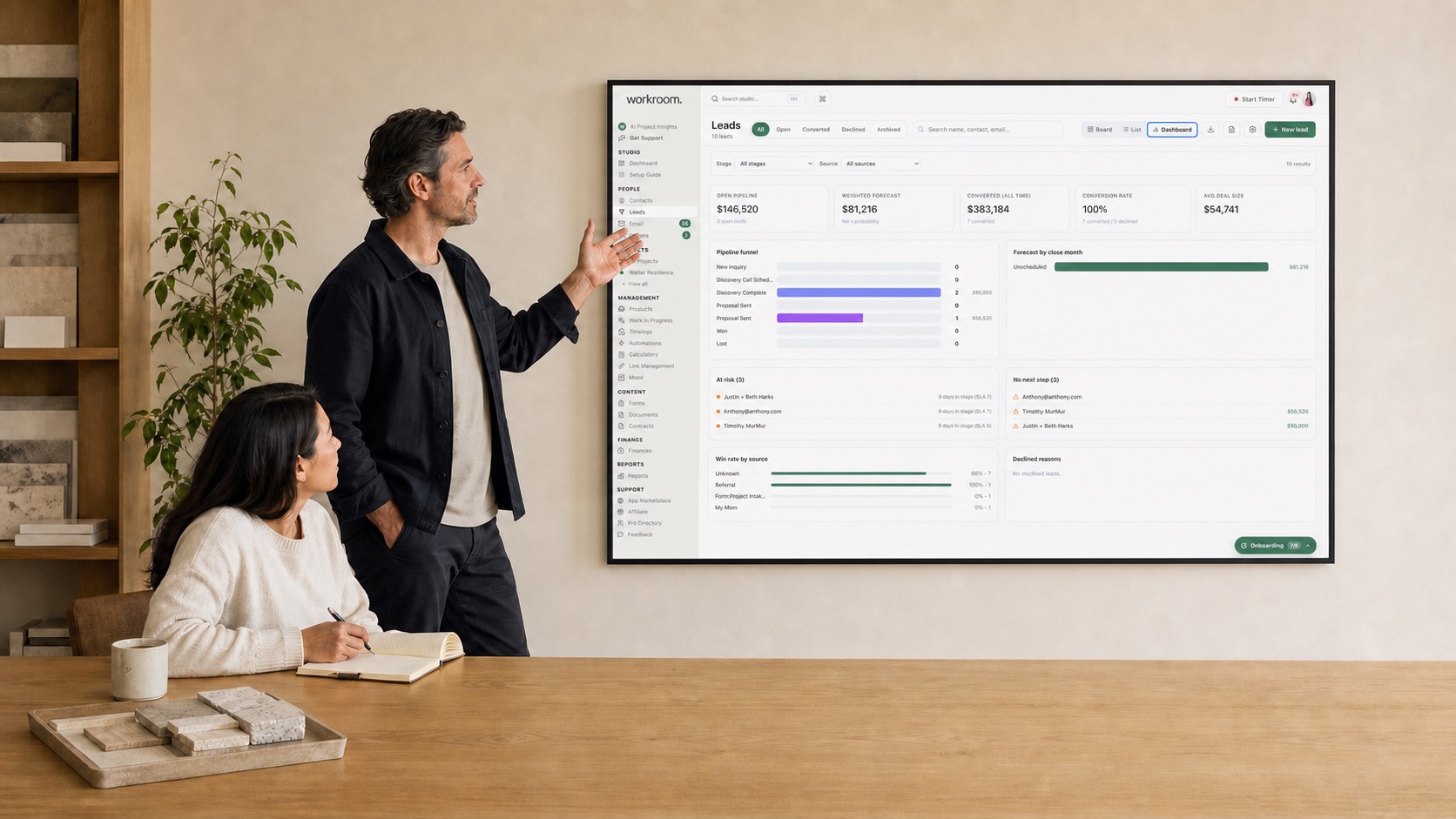
Open pipeline is a comforting number. Weighted forecast is an honest one: every open fee multiplied by the probability of its stage. And win rate by source is the number that tells you which marketing to stop paying for.
Alongside it: at-risk leads, leads with no next step, forecast by close month, and declined reasons when you lose one.
Convert and the contact, scope and details carry across. The project starts populated instead of blank.
Documents, proposals and contracts sit on the lead, so the paperwork and the pipeline are the same record.
Anything sent from Workroom's email module lands on the lead automatically, and you can paste one in by hand.
Stage changes, proposal views, form submissions and automation runs, on the lead rather than in an inbox.
Generate a summary or a risk assessment on any lead, from the same records the score is built on. Walter AI →
Won leads become the revenue the reports measure, so the pipeline and the P&L are describing the same firm.
Yes: rename them, add them, reorder them, give each a color. They're the columns on your board, so the pipeline reads the way your firm actually sells rather than the way a generic CRM assumes.
No, and deliberately. A stage can auto-draft a contract when a lead enters it, but contracts are always saved as drafts. Nothing goes to a client without someone deciding to send it.
Enable a published form as a lead source and map its email and name fields. Every submission then creates a lead in the stage you nominate, deduped by email into an existing open lead so a second enquiry doesn't become a second record.
Fit out of 40, engagement out of 35 and momentum out of 25. Underneath it you get the specific reasons (days in stage against your SLA, days since any activity, whether a next-step task exists), so it's a diagnosis rather than a verdict.
They come with it. Scope, notes, appointments, emails and documents all belong to the lead, and the lead becomes the project, so the person doing the work can read what was promised.
We'll put a real lead on the board, score it, and show you what Workroom would have told you three weeks ago.